
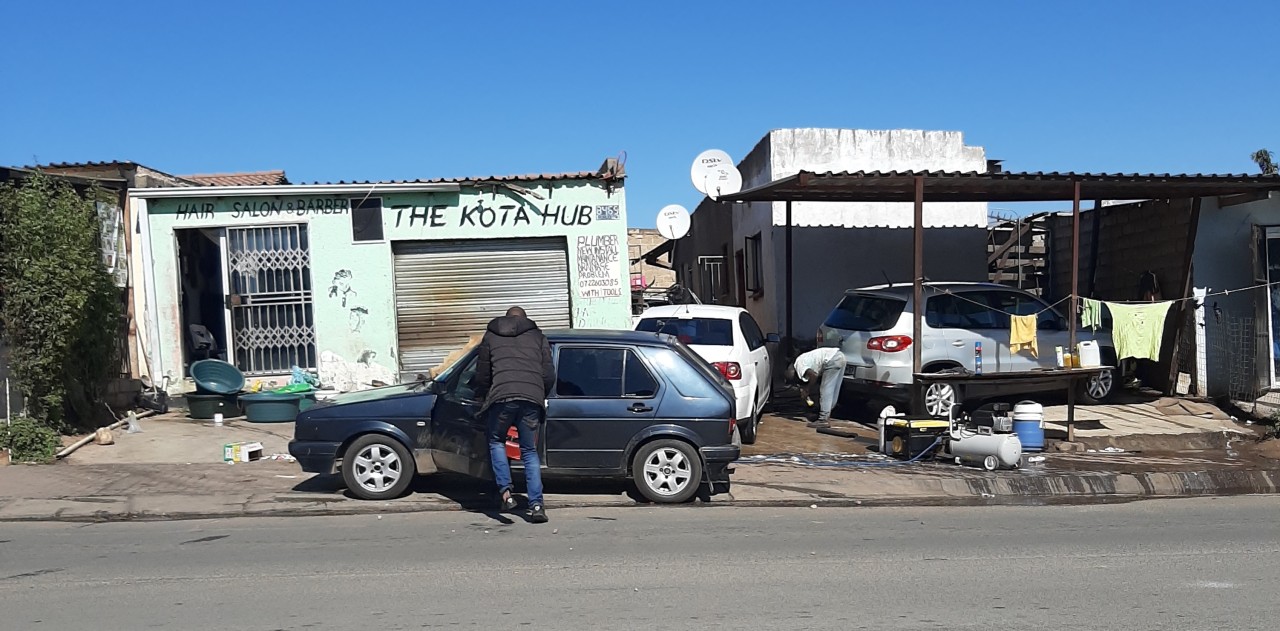

As much as the recent signing into law of the Township Economic Development Bill by the Gauteng Premier, David Makhura, is welcomed news in Gauteng province, the flip side of the coin remains sceptical about this development. A good intention it is right? But Gautengers and South Africans in general are growing higher levels of mistrust for government, politicians, and political programmes due to many failed government policies.
There is a growing perception that policies in South Africa do not become successful or fail on their own. Within a difficult chaotic political system, South Africa is known for developing a magnificent constitution that has been the envy of the world. Similarly, the government and its structures are known for creating excellent policy documents, but people still lament the implementation of those policies.
It is therefore incumbent upon the government of Gauteng Province as the economic hub of the country, and following the passing of the Township Economic Development Bill into law, to make sure that this policy is implemented scandal and corruption-free in order to benefit the people it is meant for; the residents of Gauteng.
As Gauteng Province ushers in the Township Economic Development Bill, lest we forget many policies that brought so much hope and only dished out frustrations to the country’s citizens. The nation is helplessly leaking wounds from failed policies such as the Reconstruction and Development Programme (RDP), the Growth, Employment, and Redistribution (GEAR), the Accelerated and Shared Growth Initiative for South Africa (ASGISA), the New Growth Path (NGP), and the National Development Plan (NDP).
Reconstruction and Development Programme
The RDP was introduced as part of the election manifesto of the African National Congress (ANC) in 1994. Following the ANC’s winning of national elections that year, the RDP became the primary socio-economic policy of the government. The aim of RDP was to establish a society that is more equal through reconstruction and development and to advance democracy for all people of South African. Top of its agenda, the RDP was meant to address the inequalities of the past. The programme succeeded in providing a social security structure for the government to develop a comprehensive social welfare system. However, the RDP failed dismally to live up to its expectations. It faced fiscal constraints, could not meet the human capital expertise required to run a state, and could not prioritise the RDP as a socio-economic policy, in that process, failing millions of South Africans and sowing the first seed of mistrust between the citizens and the government.
Growth, Employment, and Redistribution
Due to the restrictions emerging from the RDP, the South African government introduced the GEAR programme in 1996. GEAR was a macroeconomic policy framework aimed at stimulating faster economic growth needed to allocate resources to meet social investment needs. Policy focused, among other things, on reducing inflation, maintaining exchange rate stability and removing trade barriers. Although the management of public finances improved significantly under GEAR, this policy has been heavily criticised mainly for its neoliberal approach. While the GEAR strategy was adequate in meeting macroeconomic goals, it fell significantly short of the country’s social challenges, particularly poverty alleviation and job creation, as intended.
Accelerated and Shared Growth Initiative for South Africa
In 2005, the government launched ASGISA. In its nature, ASGISA was a brave programme that included the reduction of poverty by 2010, halving unemployment by 2014; and also recognised that the policies implemented to address these issues needed to be at the forefront of economic policy decision making. It also it aimed to improve the country’s economic performance and job creation capacity. It is believed ASGISA’s success was visible in the infrastructure programme that included public sector spending which indicated an increase from 4.6 percent of GDP in the 2006/2007 to 9.6 percent in 2009/2010. The pain point remained poverty and unemployment which became worse post the adoption of this policy.
New Growth Path
The NGP emerged in 2010 as a policy that recognised major challenges facing South Africans such as poverty, unemployment, labour issues, and inequality. Its primary objective was to confront these challenges by speeding up the country’s economic growth. There is not much to write home about on this policy given the short period of time it enjoyed before the National Development Plan was introduced in 2012.
National Development Plan
After Cabinet’s adoption of the NDP as a long-term vision and plan for the country in 2012, it became the macro-economic policy. Its focus is on economic growth as a way to address the country’s challenges of joblessness, poverty, inequality, and redistribution of resources by 2030. The NDP further advocates for a corruption-free society, with strong adherence to ethical conduct throughout society and a government that is accountable to its people. With the recent release of part four of the State Capture Commission Report, the findings expose the severity and deep rootedness of corruption as well as the total disregard of ethical conduct by some of the country’s politicians and business leaders. It has now been a decade since the NDP was introduced and the little action that was seen was that of opposition parties pressing the government to prioritise the implementation of the plan, while some within the ruling party’s alliance partners feels that the plan betrays the national democratic revolution and the Freedom Charter.
The Township Economic Development Bill
Touted as the “game-changer” for Gauteng’s economic environment, the Township Economic Development Bill aims to help township-based entrepreneurs to have access to government funding in order to start businesses. The provincial government is also looking at doing business with township entrepreneurs and reducing the red tape that often hinders small and micro enterprises to access business opportunities with government. For the bill to succeed it needs to be corruption-proof and its implementers and beneficiaries to have high ethical conduct. Gauteng should make sure that it creates an environment that will make township businesses to thrive by providing infrastructure, education, and business support to entrepreneurs. The provinces’ municipalities should come to the party to deliver uninterrupted basic services such as electricity, water, sanitation, and waste removal among others in order to enhance and nourish the business environment.
Although the intent of the bill is good, it remains to be seen if it will be implemented and if it does, how? The hope is that this bill does not become a failure like the ones outlined above, but a great opportunity to develop township economies for the betterment of the society. After all, what is common about all these policies is the drive to address joblessness, poverty, inequality, and redistribution of resources. The wish of many is for this new Township Economic Development Bill not to be counter as another government failure.
NB: This article was first published on LinkedIn on 18 May 2022 by author (https://www.linkedin.com/feed/update/urn:li:activity:6932647082465845248?updateEntityUrn=urn%3Ali%3Afs_updateV2%3A%28urn%3Ali%3Aactivity%3A6932647082465845248%2CFEED_DETAIL%2CEMPTY%2CDEFAULT%2Cfalse%29&lipi=urn%3Ali%3Apage%3Ad_flagship3_leia_post_summary%3BeyBWsz2wSnmTIOU55aLvBg%3D%3D)